

Dovetail drawers are drawer boxes built with dovetail joints, interlocking “pins” and “tails” cut into the wood that lock the drawer sides, front, and back together without relying on glue or fasteners alone. This joinery method is widely regarded as a hallmark of quality cabinet drawer construction.
A dovetail joint consists of two parts:
Tails – trapezoidal (fan-shaped) cuts on one board.
Pins – the matching notches cut into the adjoining board.
When assembled, the tails slide into the pins, creating a joint that mechanically interlocks in a way a straight butt joint or simple stapled joint cannot. Because the shape of the joint widens toward the outside edge, it physically resists being pulled straight apart. This is exactly the kind of stress a drawer experiences every time it’s opened.
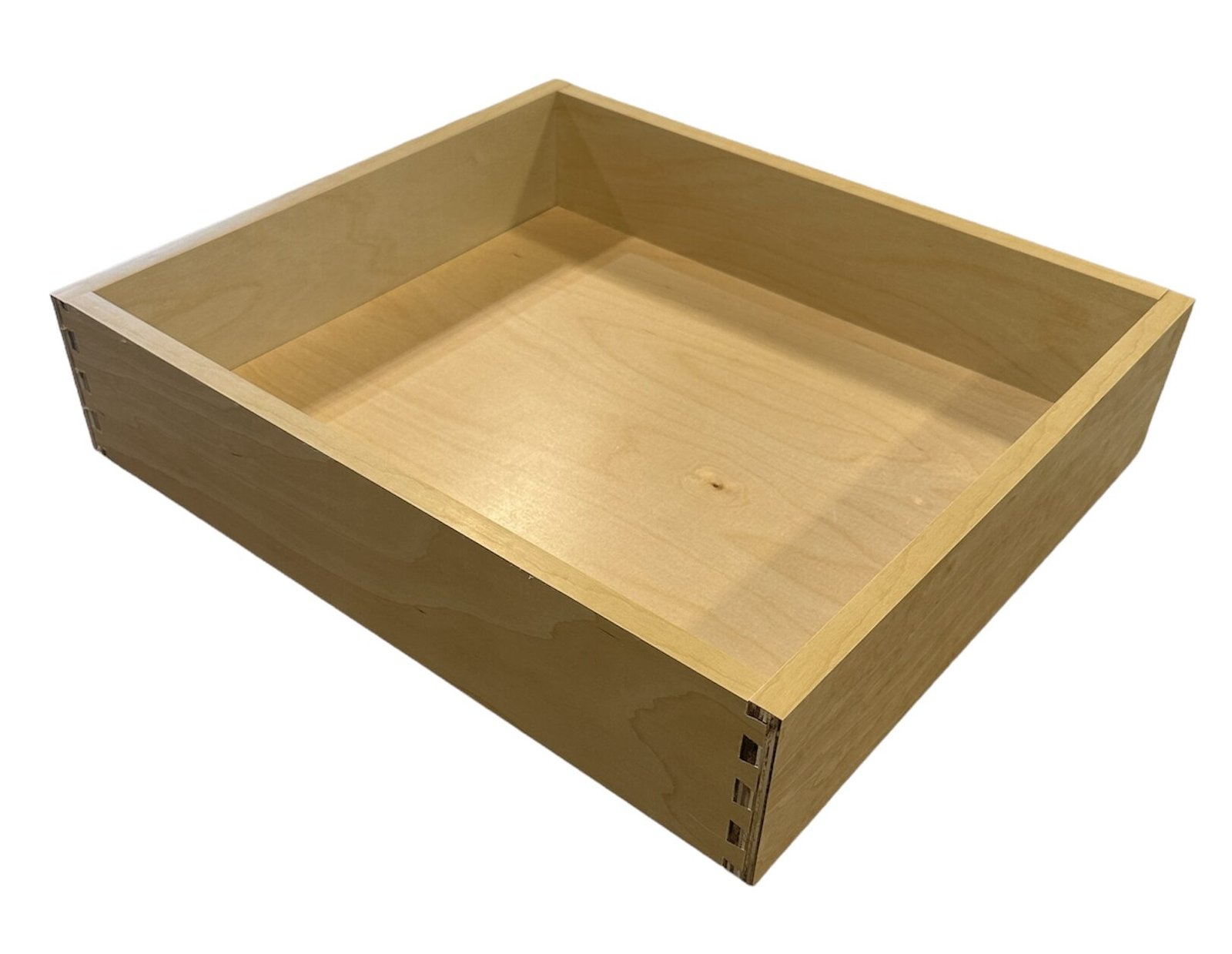
Dovetail drawers are cabinet drawer boxes joined with interlocking wedge-shaped pins and tails instead of nails, staples, or butt joints. Cabinetmakers have used this construction method for centuries because it creates a mechanical bond that resists pulling apart under repeated use.
For anyone planning a luxury kitchen, custom closet, or full cabinetry renovation, drawer construction is one of those details that’s easy to overlook on a showroom floor but becomes obvious within a year or two of daily use, which is exactly why it matters when you’re making a long-term investment in your home.
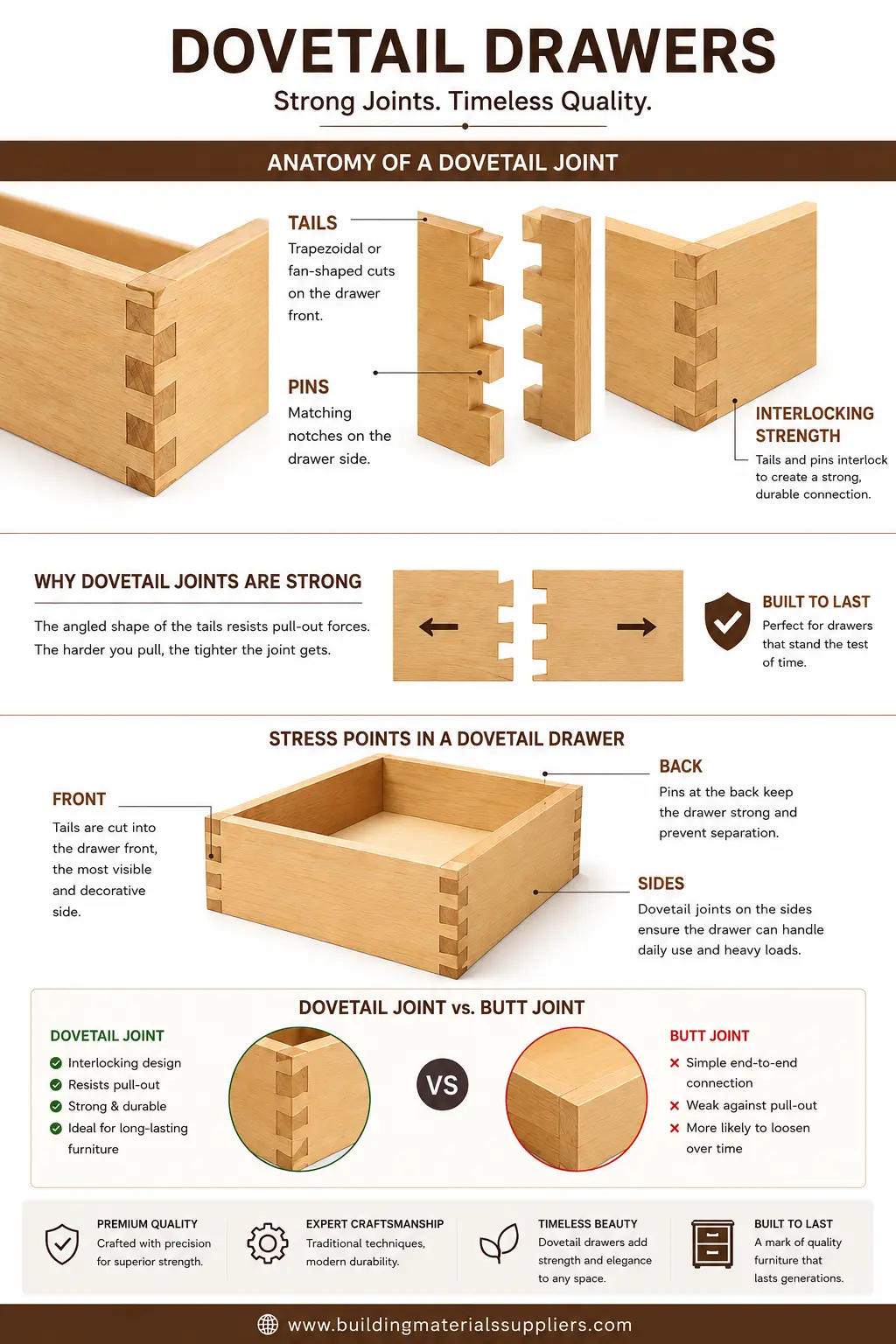
A dovetail drawer box is typically made up of five components:
-
Two drawer sides — run front to back, dovetailed at both ends
-
A drawer front — the visible face (or, in framed cabinetry, the piece behind a separate decorative front)
-
A drawer back — closes the rear of the box
-
A drawer bottom — usually set into a groove (dado) cut into the sides, front, and back
The construction process generally follows this sequence:
-
Cutting the joinery — Pins and tails are cut into the ends of the side, front, and back panels, sized to interlock precisely.
-
Cutting the bottom groove — A dado is routed into the inside faces of the sides, front, and sometimes the back, to hold the drawer bottom panel.
-
Dry-fitting — The pieces are test-fit to check alignment before glue is applied.
-
Gluing and assembly — Wood glue is applied to the joints, the bottom panel is slid into place, and the box is clamped square while the glue cures.
-
Sanding and finishing — Edges are sanded smooth and the box may be finished or sealed depending on the application.
The quality of a dovetail drawer comes down to precision at each of these steps. Pins and tails that are cut loosely will rely more heavily on glue to hold together. This reduces the strength advantage the joint is meant to provide. Tight, consistent joints with proper glue coverage are ideal. This is what separates a well-built dovetail drawer box from a poorly executed one.
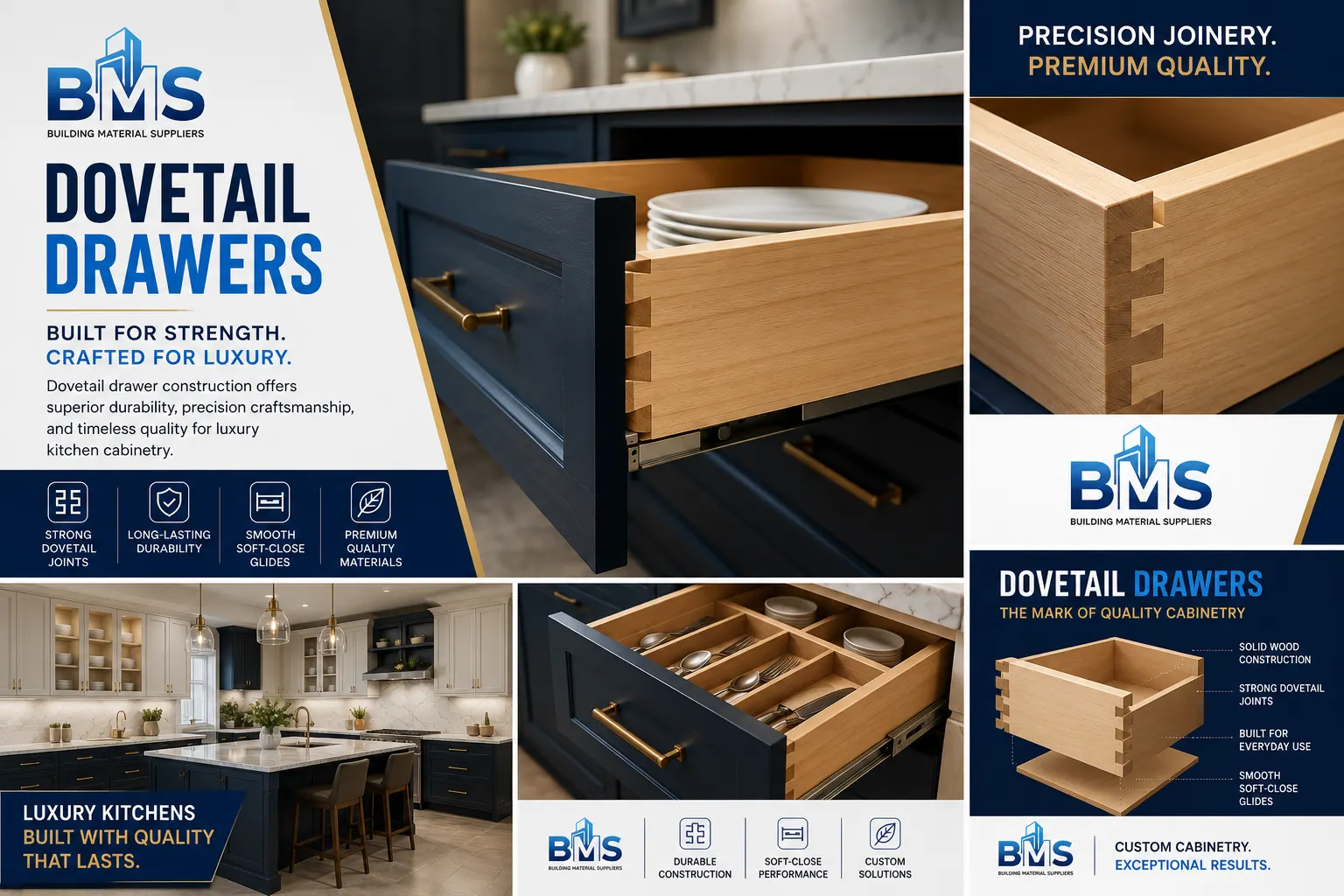
What Materials Are Used for Dovetail Drawer Boxes?
Dovetail drawer boxes are most commonly made from solid hardwood or high-quality plywood. Common choices include:
Maple: a popular choice for its light color, hardness, and smooth finish; widely used in kitchen cabinetry.
Birch: Offers good strength and a relatively even grain at an often more accessible price point than maple.
Oak: Known for its pronounced grain pattern and durability; a traditional choice for cabinetry.Plywood: Multi-ply plywood drawer boxes can offer strong, stable construction and resistance to warping, particularly in humid environments.
Other hardwood options: Some cabinetmakers offer species like poplar or ash depending on regional availability and budget.Material choice shouldn't be evaluated in isolation.
A dovetail joint cut into thin, low-grade material won't perform the same as one cut into properly dimensioned hardwood.When comparing drawer options, it's worth considering material together with drawer-side thickness. The bottom-panel construction, joinery precision, and the specifications set by the cabinet manufacturer are also important.
How to Choose High-Quality Dovetail Drawers
When comparing dovetail drawer options, a practical checklist can help separate genuinely well-built drawers from those that only look the part.
Quality of the dovetail joint: Look for clean, precise cuts rather than gaps or visible glue fill.Drawer material: Confirm whether the box is solid hardwood, plywood, or a mix
Drawer thickness: Thicker drawer sides generally offer more strength and longevityBottom panel construction: A bottom set into a routed groove is generally sturdier than one stapled on.
Drawer dimensions: Confirm the box will fit your cabinet opening and intended use (utensils vs. pots, for example)
Slide compatibility: Confirm the drawer box is compatible with the slide hardware you want.Finish quality: Check for smooth sanding and even sealing or staining
Manufacturer/cabinetmaker specifications: Ask for written specs rather than relying on general marketing claims.
Are dovetail drawers stronger than regular drawers?
Are dovetail drawers worth the extra cost?
For frequently used drawers, such as those in kitchens and bathrooms, dovetail construction is often worth the added cost due to its durability advantages. For lightly used or budget-conscious projects, a more standard drawer construction may be a reasonable choice instead.
Long Lasting Solution:
Drawer construction is one of the details that separates cabinetry built to last from cabinetry that loosens within a few years.
Dovetail drawers offer a genuine construction advantage. A mechanically interlocking joint built to handle the repeated stress of daily use. This is why they show up consistently in custom cabinetry. They are the right choice for luxury kitchen renovations. Your project depends on how the drawers will be used and where they fit into your overall budget.
If you're planning a kitchen renovation, it's worth asking about drawer-box construction, materials, and slide hardware before placing an order.