
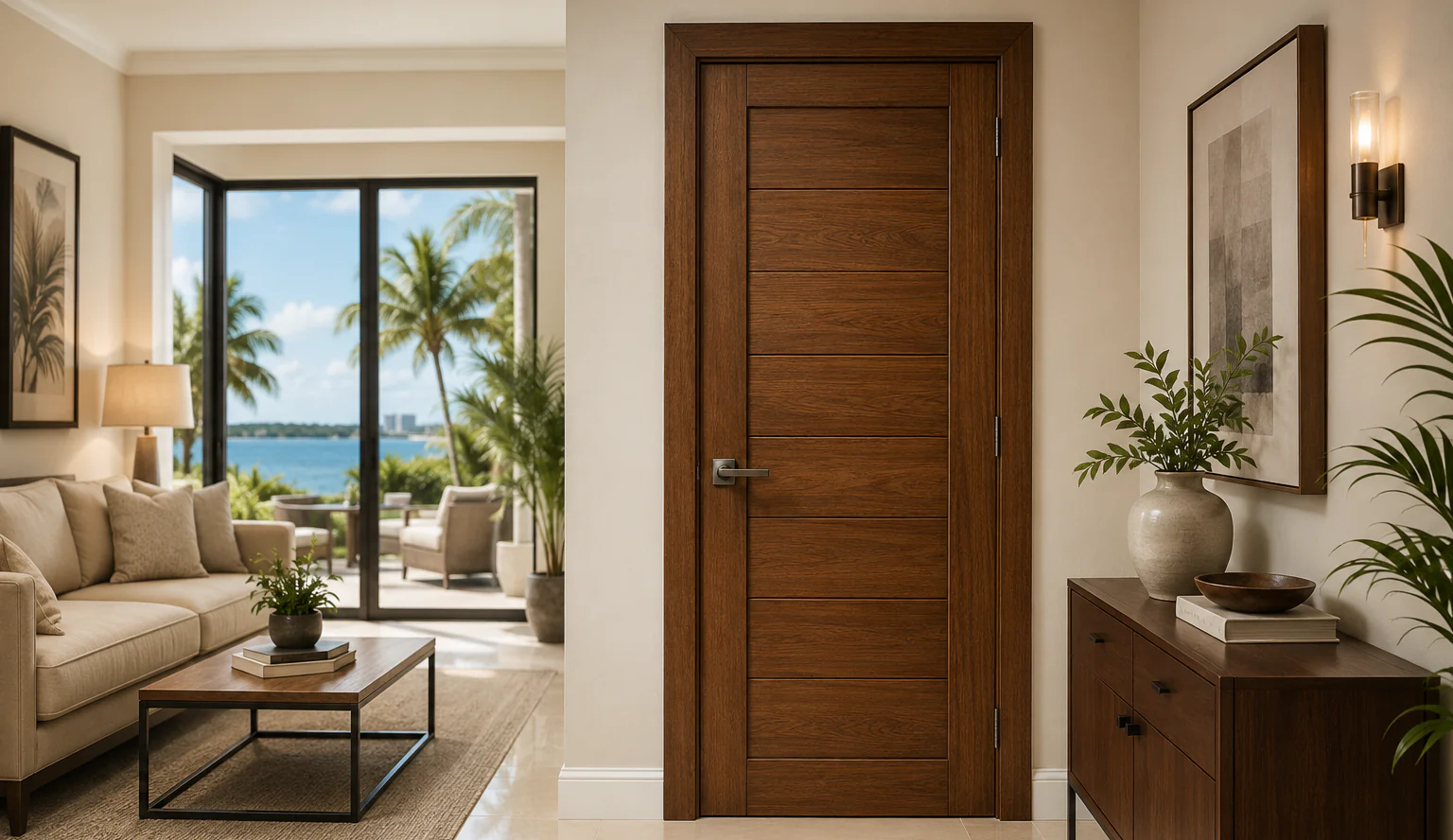
South Florida wood doors warp faster than doors almost anywhere else in the country. The reason is humidity: wood absorbs moisture from the air, and when one side of a door absorbs more than the other, the door bows, cups, or twists. This guide explains which door types hold up best, how installation and sealing prevent warping, and when a warped door needs replacing.
Why Humidity Causes Wood Doors to Warp
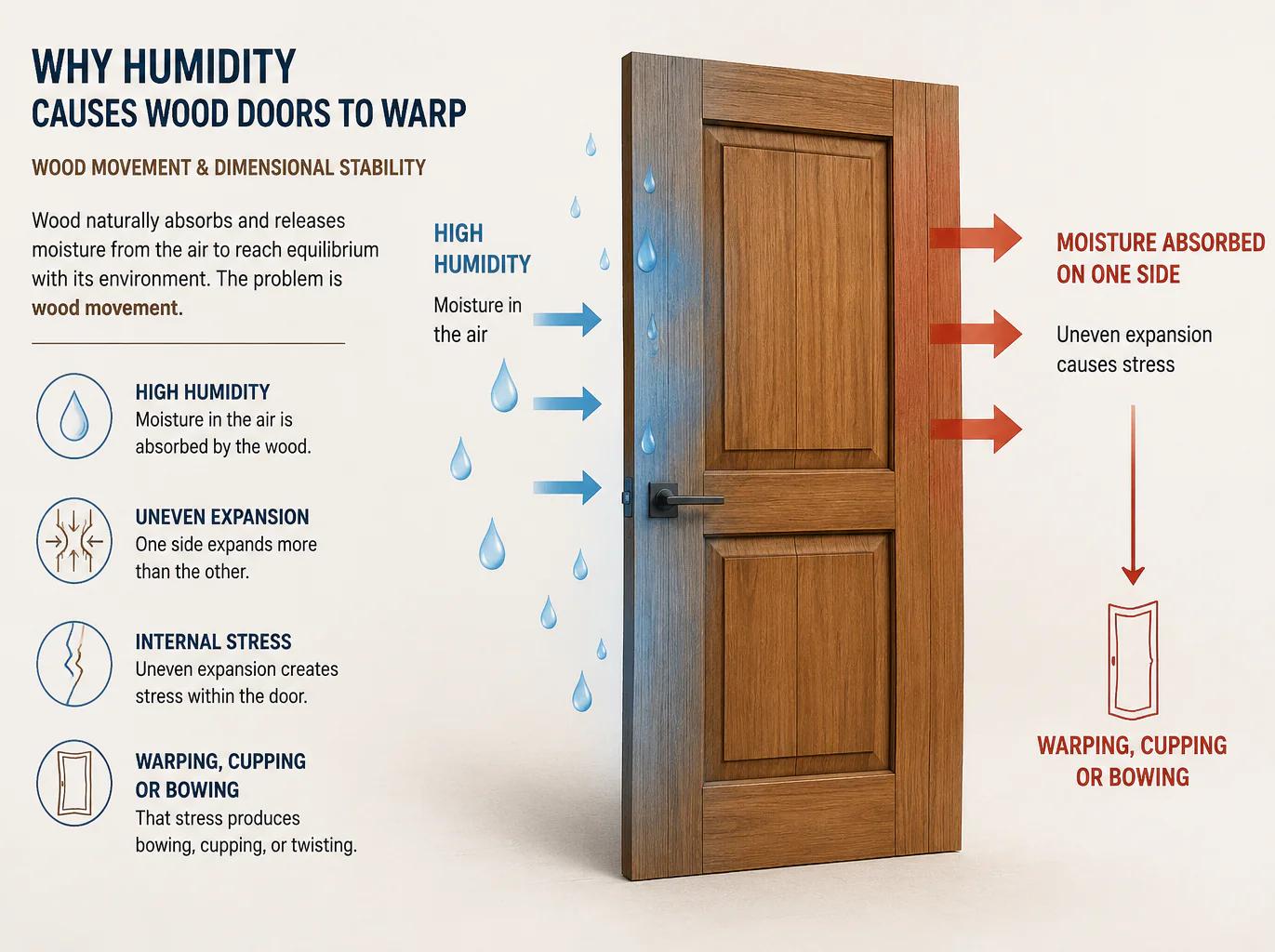
Wood absorbs and releases moisture to match the air around it. That’s normal — not a defect. The problem is uneven absorption. One face of a door often sits in drier, air-conditioned air, while the other faces a more humid room. The drier side stays smaller. The damp side expands. That imbalance creates the internal stress that bends a door out of shape.
Doors built with good dimensional stability resist this better than doors made from mismatched or poorly dried lumber. Still, no wood door is fully immune. That’s why humidity exposure matters so much for South Florida wood doors specifically.
Why South Florida's Climate Makes It Worse
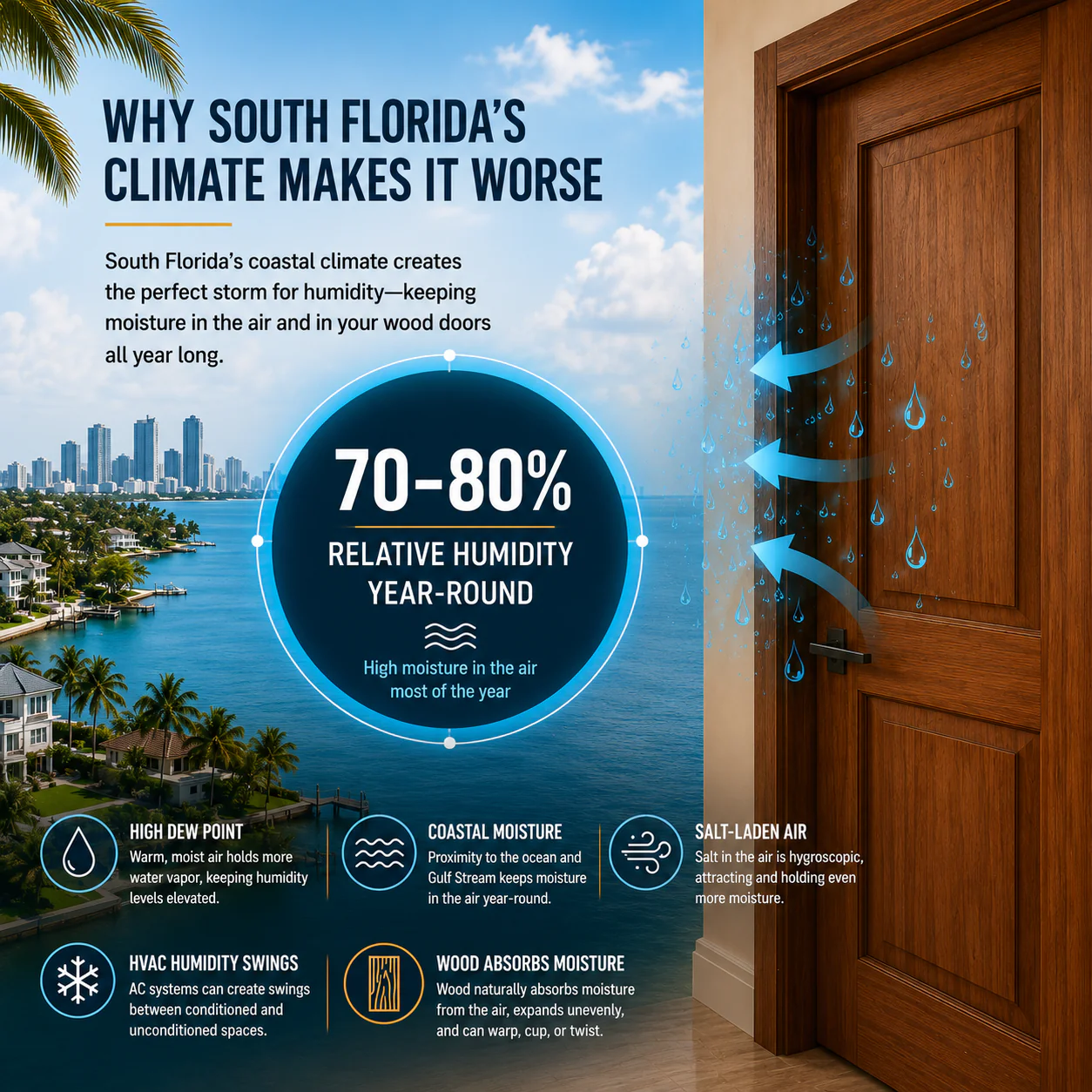
South Florida humidity commonly runs 70–80% for much of the year. According to NWS Miami–South Florida climate data, there’s little seasonal relief here compared to most other U.S. regions. Coastal moisture keeps dew points high even when humidity numbers dip slightly.
Air conditioning adds a second layer to the problem. Systems that cool a room quickly without running long enough to dehumidify it leave the air feeling damp anyway. Doors between conditioned and unconditioned spaces absorb the brunt of that repeated swing. That’s one more reason South Florida wood doors move faster than the same door would in a drier climate.
Signs Your Interior Wood Door Is Warping
Sticking and Latch Problems
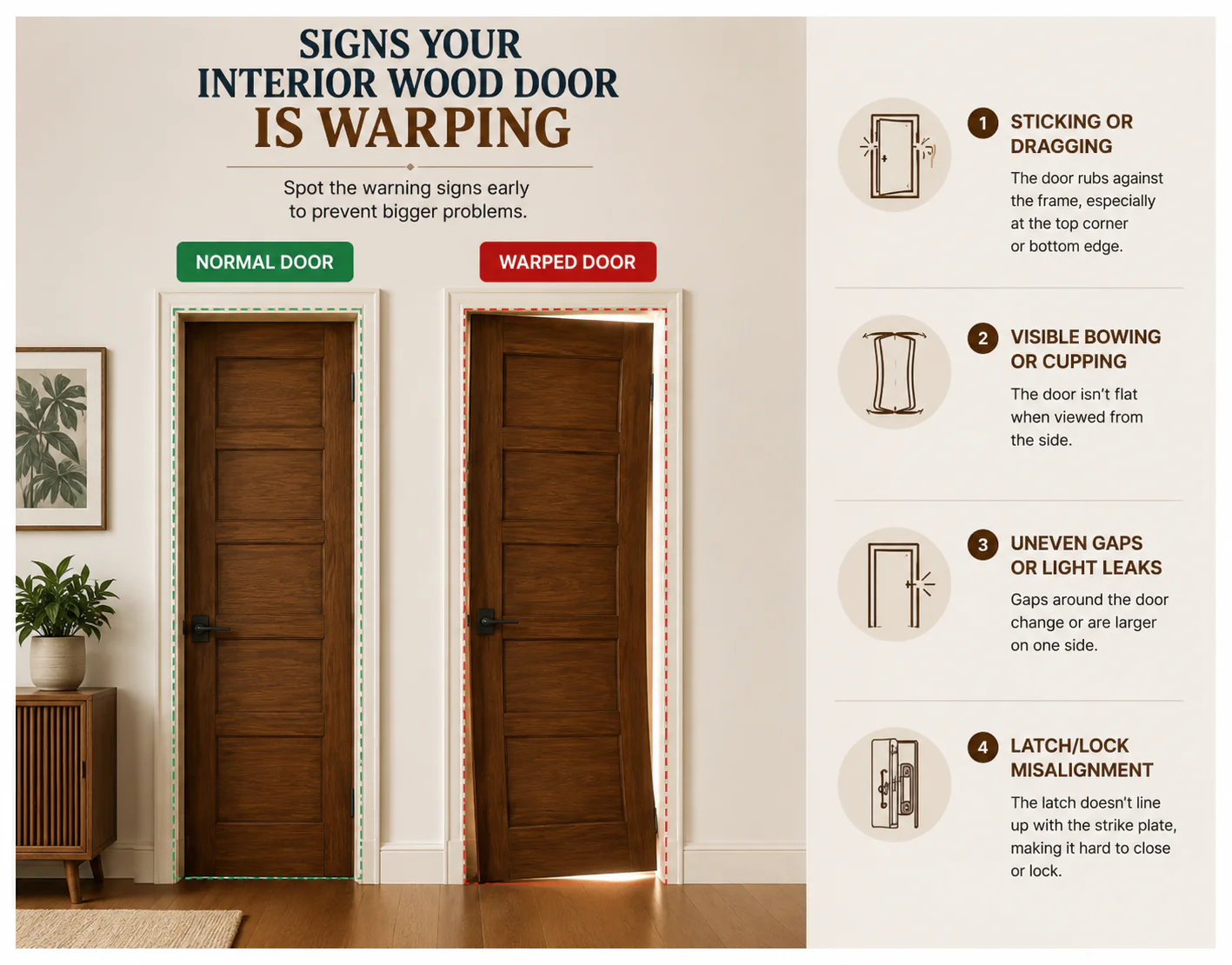
A door that won’t close properly is often the first sign. It sticks or drags against the frame, usually at a top corner or bottom edge. A latch that no longer meets the strike plate cleanly is another early warning sign.
Visible Bowing and Changing Gaps
Sight down the door’s length to check for a visible curve. Gaps that grow or shrink with humidity and AC cycling point to moisture-driven movement. Structural settling can cause similar symptoms, so it’s worth ruling out before assuming humidity is the cause.
Which Door Construction Resists Humidity Best
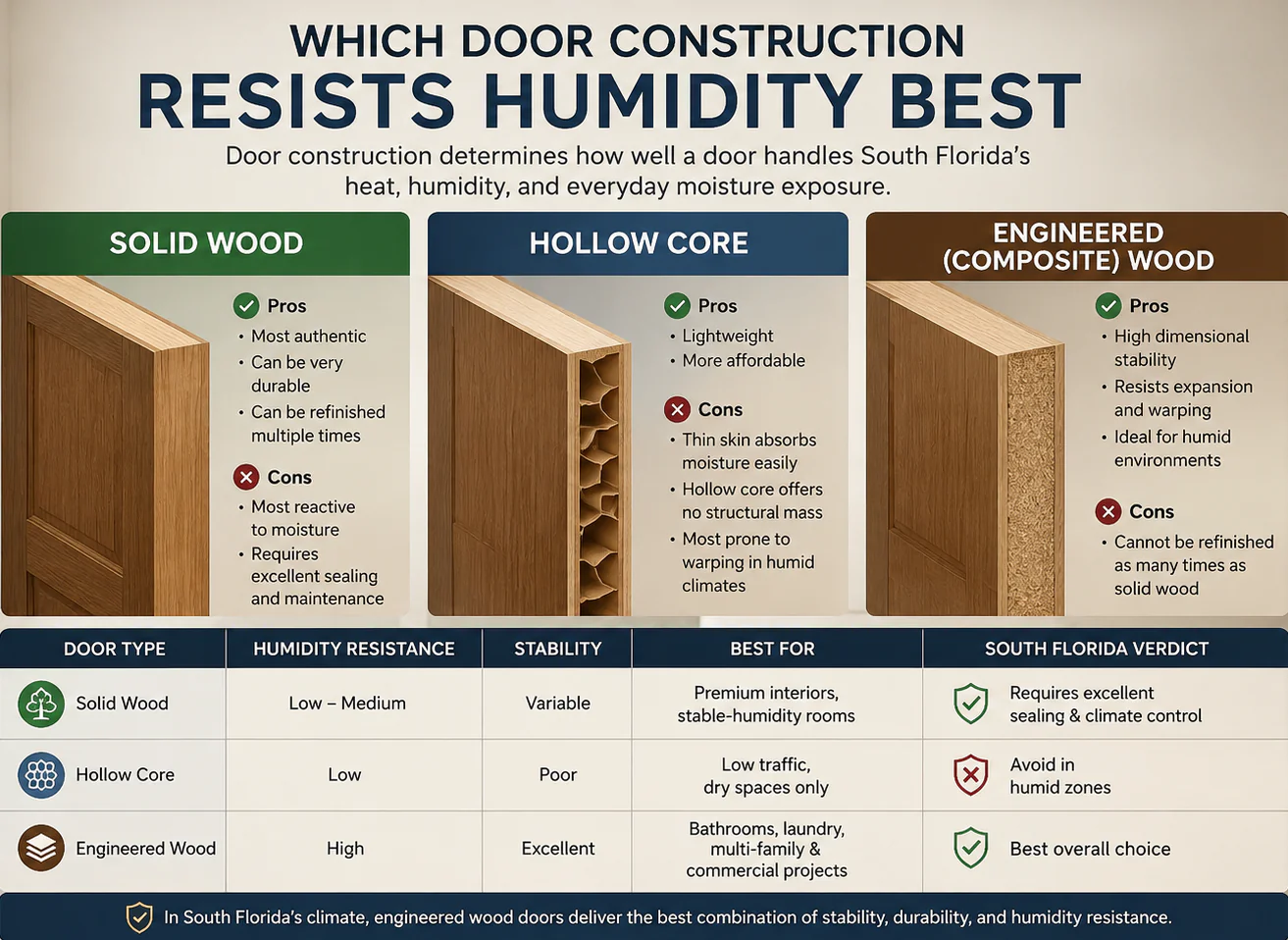
Door construction matters more than appearance for South Florida wood doors. Solid wood looks the most authentic but has the most raw material to absorb moisture unevenly. Hollow-core veneer doors perform worst, since a thin skin over an empty core has little to resist bending. Engineered wood doors use a composite core built to cancel out expansion, making them the most stable choice for humid climates. Fiberglass doors, mainly used on exterior entries, offer full humidity immunity.
How Core Construction and Sealing Work Together
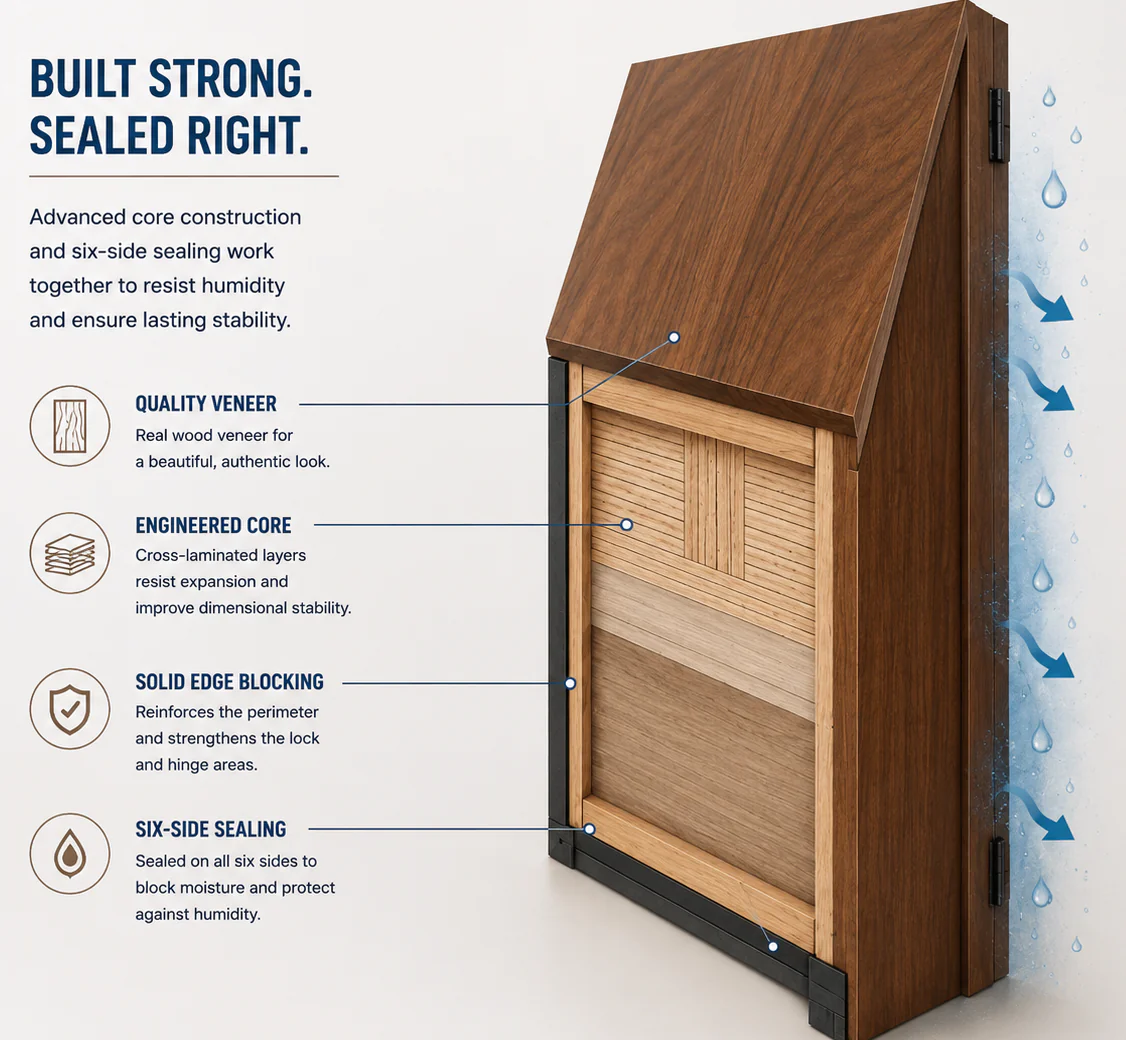
Stile-and-rail doors let individual panels float and expand on their own. Engineered wood doors use cross-grain layers to cancel out expansion directly. Either design beats a solid slab for stability.
Core design alone isn’t enough, though. Sealing on all six sides is what actually limits moisture absorption day to day. This six-side standard is reflected in the door industry’s own finishing requirements,ANSI/WDMA I.S.1A. The top and bottom edges absorb moisture fastest, and they’re the surfaces most often left unsealed after on-site trimming — since they’re invisible once the door is hung.
Installation Practices That Prevent Warping
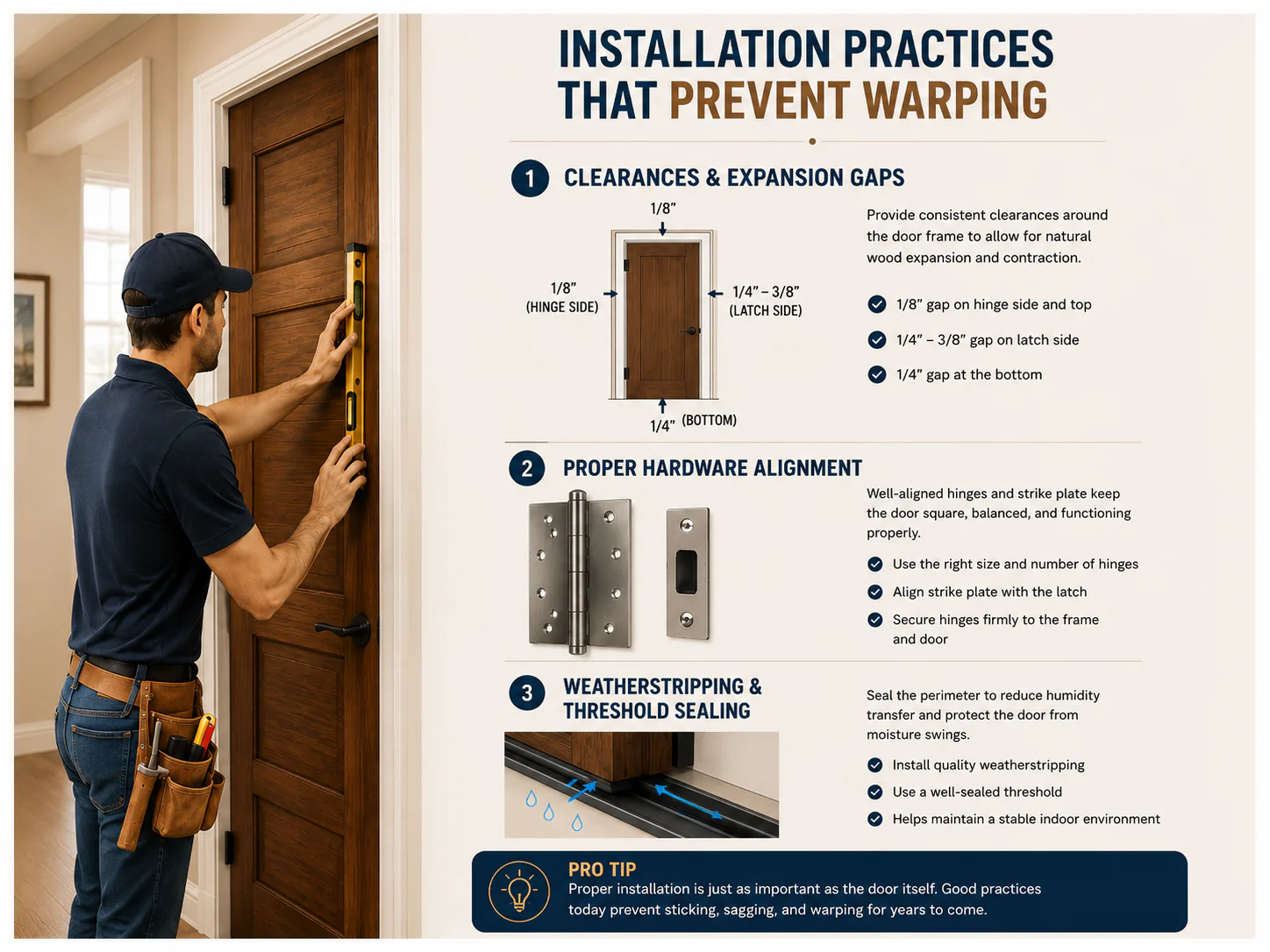
Doors need small, consistent clearances around the frame. A gap near ⅛ inch on the hinge side and top gives the door room to expand without binding. The bottom needs a slightly larger gap.
Hardware matters too. An undersized or misaligned strike plate lets a door sag or twist over time. So does using too few hinges for the door’s weight. Both problems compound humidity-driven movement with mechanical stress.
Ongoing Humidity Control
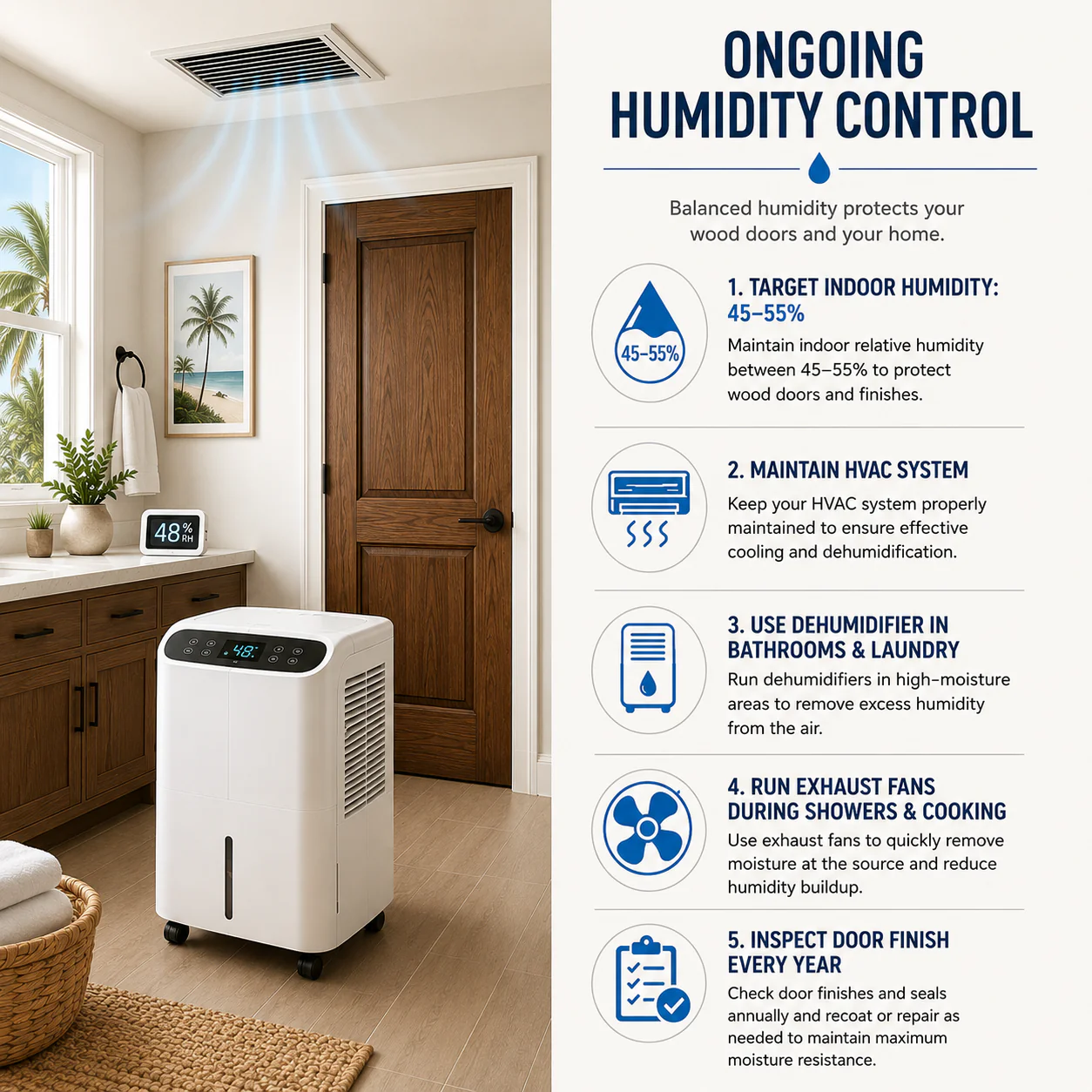
A tighter indoor humidity target — 45–55% — is commonly recommended specifically to protect wood doors, floors, and furnishings. This sits inside the broader comfort range set by ASHRAE Standard 55, which allows 30–60% for general occupant comfort.
A dehumidifier in high-moisture rooms helps hold that tighter range. So does a properly maintained HVAC system, since it’s doing double duty, cooling the home and removing moisture at the same time. Exhaust fans during showers and cooking cut down on ambient moisture near nearby doors.
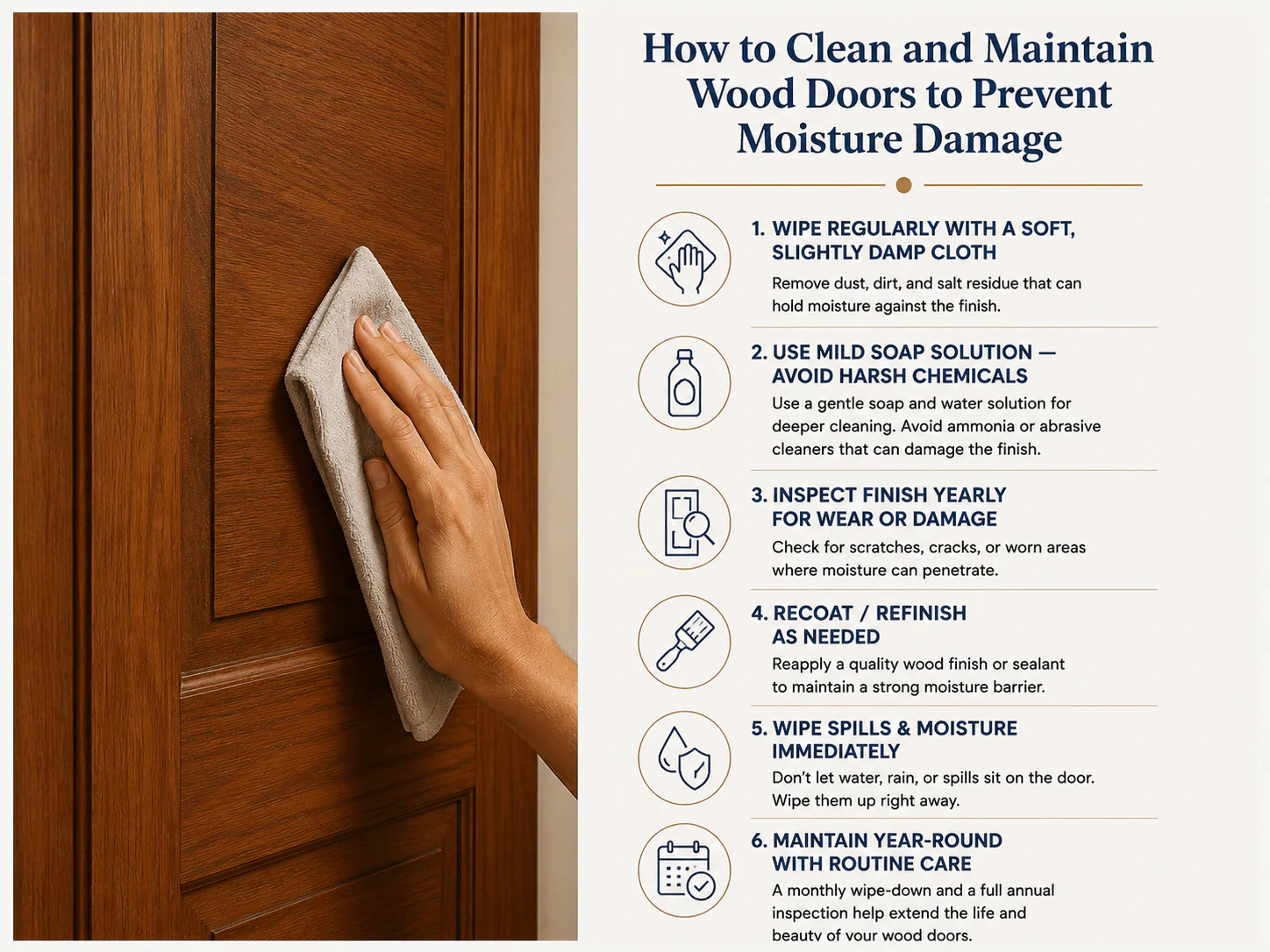
How to Clean and Maintain Wood Doors to Prevent Moisture Damage
Routine cleaning protects a door’s finish, which in turn protects against moisture. A mild soap solution is enough for most interior doors.
Exterior doors need more frequent attention, since they face sun, rain, and salt air directly. A gentle cleaner every few weeks prevents grime from breaking down paint or varnish. A dulled finish calls for a fresh coat of polish. A cracked finish may need full refinishing before moisture gets underneath it. A monthly wipe-down plus a full annual inspection is the recommended cycle for South Florida’s climate.
Can a Warped Door Be Repaired, or Does It Need Replacing?
Minor Warping Is Often Fixable
Hinge adjustment and rehanging can correct sagging that looks like warping but isn’t. Planing can fix minor dragging, though it’s temporary if the moisture problem isn’t addressed too. Mild cases caught early can sometimes be corrected through resealing combined with alignment work.
Moderate to Severe Warping Usually Isn’t
Once a door has visibly bowed, the damage has typically set in for good. At that point, replacement is more reliable than repeated repair attempts. Trying to plane out a real warp usually removes too much material and weakens the door.
Choosing the Right Doors for a South Florida Home
For Homeowners
Engineered wood doors offer the best balance of appearance and stability for most South Florida homes. Bathrooms, laundry rooms, and doors near garages or lanai access see the most humidity swings; these are the spots most worth upgrading first.
For Builders and Developers
Specifying South Florida wood doors correctly at the sourcing stage avoids a costly problem later: warranty callbacks and replacements across dozens of units after residents move in. Core construction and sealing quality matter more than appearance when specifying at scale.
BMS sources and supplies durable South Florida wood doors, including engineered and custom options, factory-direct to builders, developers, and homeowners, backed by over 25 years of regional experience.
Frequently Asked Questions
Why do interior wood doors warp in South Florida?
Relative humidity commonly runs 70–80% for much of the year here, with little seasonal relief. Wood absorbs and releases moisture constantly, and uneven absorption across a door’s faces creates the stress that causes bowing, cupping, or twisting.
What type of door resists humidity best?
Engineered wood doors are generally the most stable choice. Their composite core cancels out the expansion forces that cause warping, making them more resistant than solid wood or hollow-core veneer doors.
What indoor humidity level protects wood doors in Florida?
A range of 45–55% is commonly recommended specifically for wood protection — a tighter target inside ASHRAE’s broader 30–60% comfort range. A dehumidifier and well-maintained HVAC help hold that range.
Can a warped door be repaired?
Minor warping caught early can often be fixed with hinge adjustment, planing, or resealing. Once a door has visibly bowed, replacement is usually the more reliable option.
How often should South Florida wood doors be maintained?
A monthly wipe-down plus a full annual inspection of the finish and edge sealing is the recommended cycle here — more frequent than in drier climates, since humidity and salt air break down finishes faster.
What causes a wood door to swell?
Swelling happens when wood fibers absorb ambient moisture from humid air or direct water contact (rain, sprinklers, condensation). As the fibers take on moisture, they physically expand, which can cause the door to stick in its frame, distort its shape, or push against hinges and hardware.