Why Hurricane Impact Windows Are Essential for Multi-Unit Projects
For developers and contractors managing multi-unit residential or mixed-use buildings in hurricane-prone regions, window selection is a structural, legal, and financial decision that affects every stakeholder. Hurricane impact windows protect the building envelope from windborne debris and extreme pressure changes, preventing window blowouts that can lead to catastrophic roof uplift and collapse. They also deliver year-round returns: lower energy bills, reduced exterior noise, and lower insurance premiums. On a multi-unit project, a wrong specification across 80 units doesn’t fail one inspection — it fails every one. Getting it right from the start is worth the time.
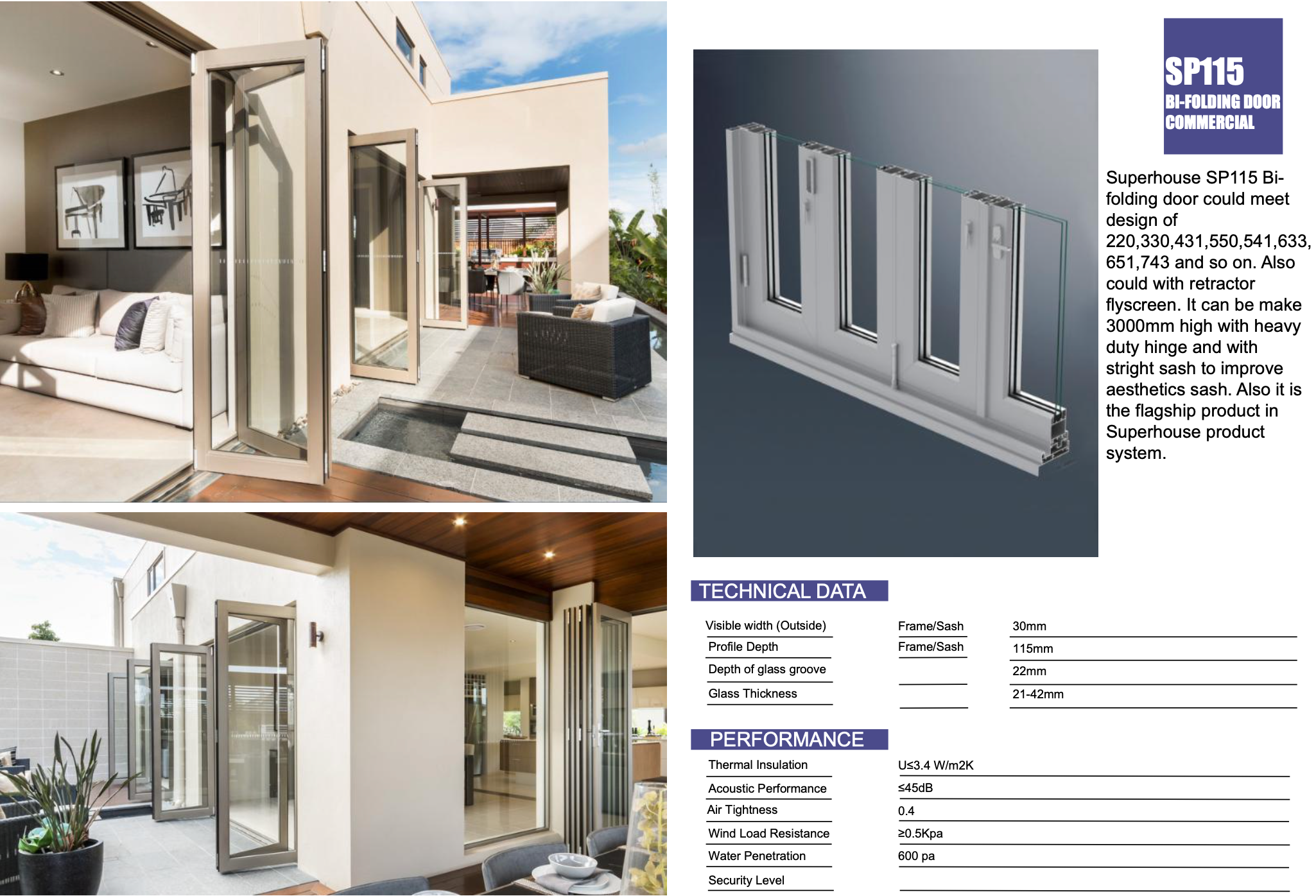
Beyond storm protection, these windows provide long-term operational benefits. Their advanced glazing systems help improve energy efficiency by reducing heat transfer, lowering HVAC costs throughout the year. They also minimize outside noise, creating a quieter and more comfortable living environment for residents. In many cases, impact-rated windows can contribute to lower insurance premiums and help projects meet local building codes and compliance requirements.
Building Codes and Hurricane Impact Window Requirements
Florida’s building code is the strictest in the country, driven by the lessons of Hurricane Andrew in 1992. The Florida Building Code (FBC) 8th Edition is currently enforced; the 9th Edition takes effect December 31, 2026, with significant proposed changes including 160 mph envelope requirements for multistory buildings near tidal waters.
Two designations define compliance obligations:
- Wind-Borne Debris Region (WBDR): Covers most of coastal Florida. All openings must be impact-resistant or protected by approved shutters.
- High-Velocity Hurricane Zone (HVHZ): Miami-Dade and Broward counties. Products must meet Miami-Dade NOA or Florida Product Approval with HVHZ designation, including large missile impact testing.
|
Product Approval Tier |
Where Required |
Standard |
|
Miami-Dade NOA |
HVHZ (Miami-Dade & Broward) |
Strictest — large missile testing |
|
Florida PA (HVHZ) |
HVHZ alternative |
Must carry HVHZ designation |
|
Florida PA (standard) |
Non-HVHZ WBDR areas |
Standard impact testing |
Replacement projects that touch more than 25% of glazed openings within 12 months must meet current impact standards. Every project requires a permit before installation begins. Fire-rated doors are governed separately under NFPA 80 and are required simultaneously with impact windows on high-rise and multi-family projects — they address different hazards under different code sections.
Impact Resistance and Safety Ratings
Not all hurricane windows ratings are equal. A product labeled “impact-rated” can still fail an inspection if its ratings don’t match project requirements. There are two separate certifications to confirm:
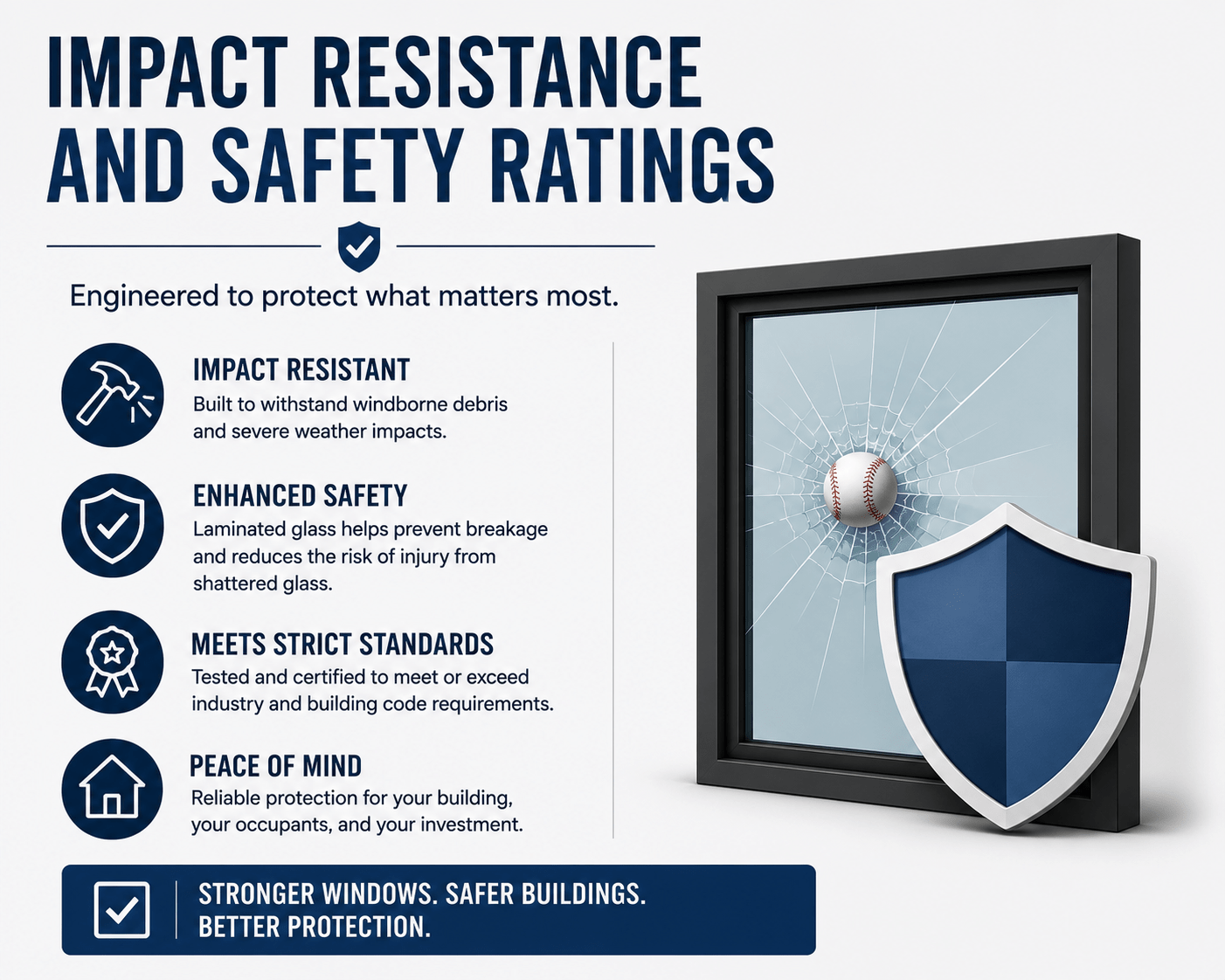
- Design Pressure (DP) rating: Measures structural resistance to wind loads in psf. A DP-50 product is tested to 75 psf in the lab. Required DP varies by floor level, exposure category, and corner vs. field zone placement. This is the core window wind rating used across the industry.
- Impact resistance: Determined by missile testing. HVHZ requires the large missile test (ASTM E1886/E1996) — a 9-pound, 6-foot 2×4 fired at 50 fps. Non-HVHZ areas require small missile testing.
A high DP rating does not mean a window is impact-rated. These are separate certifications. Impact glass uses laminated construction — two panes bonded by a PVB interlayer that holds the glass together on impact. Tempered glass alone does not qualify. To understand how strong are hurricane impact windows in practice: most residential products are windstorm certified windows ranging from DP-30 to DP-50; coastal high-rise and HVHZ products run DP-50 to DP-70+.
Window Frame Material
Frame material affects performance, longevity, and code compliance — not just appearance. Aluminum is the standard for South Florida commercial and multi-unit projects: structurally strong, supports the highest DP ratings, and holds up in coastal salt air with proper finishing. Its main drawback is thermal conductivity. Vinyl offers better thermal performance and lower entry cost but is less rigid, limiting maximum panel sizes and DP ratings — appropriate for lower-rise residential, not high-rise. The same glass unit carries different DP ratings in different frames. Always verify the DP for the specific frame-and-glass combination ordered.
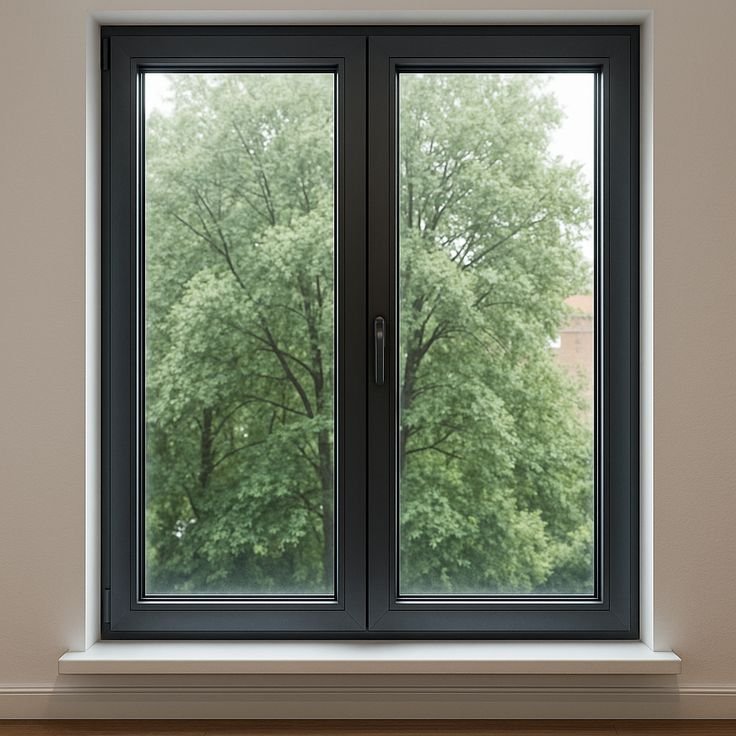
Hurricane Window Styles
Style affects ventilation, egress compliance, and achievable DP ratings:
|
Style |
Best For |
DP Note |
|
Single hung |
Standard residential, lower floors |
Standard range |
|
Double hung |
Multi-unit, hospitality |
Standard range |
|
Casement |
Luxury residential, egress openings |
Higher DP than hung — sash seals tight when closed |
|
Sliding |
Condos, apartments |
Slightly lower DP than casement |
|
Fixed (picture) |
Lobbies, upper-floor high-DP zones |
Highest achievable DP |
|
Bifold |
Amenity areas, open-plan spaces |
Longer lead times — order early |
Operable windows carry lower DP ratings than fixed windows of the same size. On upper floors and corner zones, the specification may need to shift from operable to fixed. Address this in the design phase, not at inspection.
Energy Efficiency and Insulation
Florida Building Code Chapter 13 sets minimum U-factor and SHGC thresholds. Impact windows meeting these thresholds satisfy both the opening protection requirement and the energy requirement simultaneously. SHGC is the most critical energy rating in Florida — lower SHGC means less solar heat entering the building, reducing AC load on south- and west-facing units. Low-E glass coatings reflect infrared heat while allowing visible light through. Double-pane impact IGUs improve both thermal and acoustic performance over single-pane laminated glass and are worth evaluating on 100-unit projects where cumulative energy savings can offset the cost premium within a few years.
Design Pressure and Wind Load Ratings
Design pressure rating for hurricane impact windows is not a one-size-fits-all calculation. Required DP is site-specific and varies by basic wind speed, exposure category (B, C, or D), building height, and whether the window is in a corner zone or field zone. Windproof windows — or more precisely, storm-rated windows that are windstorm certified — are rated to specific thresholds, not to infinity. A 150 mph wind zone does not mean every window needs the same DP rating. A structural engineer or product approval document should specify the required DP for each location. Inspectors verify both the approval certificate and the installed label — a mismatch triggers a re-inspection.
Installation and Long-Term Performance
Most post-storm window failures trace back to installation defects, not product defects. Key requirements on multi-unit projects:
- Permit before installation: No exceptions. Unpermitted work fails inspection and is frequently denied by insurance.
- Licensed installers: Florida requires specific licensing. Unlicensed labor creates liability for the GC and developer and can void the product warranty.
- Approved installation method: Fastener type, spacing, and embedment depth are part of the product approval — not suggestions. Flashing errors are the most common source of water intrusion.
- Post-installation testing: Water infiltration testing before finishes go in saves more than it costs.
Annual maintenance: rinse frames, lubricate hardware, inspect weatherstripping and sealant, check IGU for fogging. Oceanfront properties need quarterly rinsing. Hardware failure is the cheapest problem to fix when caught early.
Warranties, Maintenance, and Lifecycle Costs
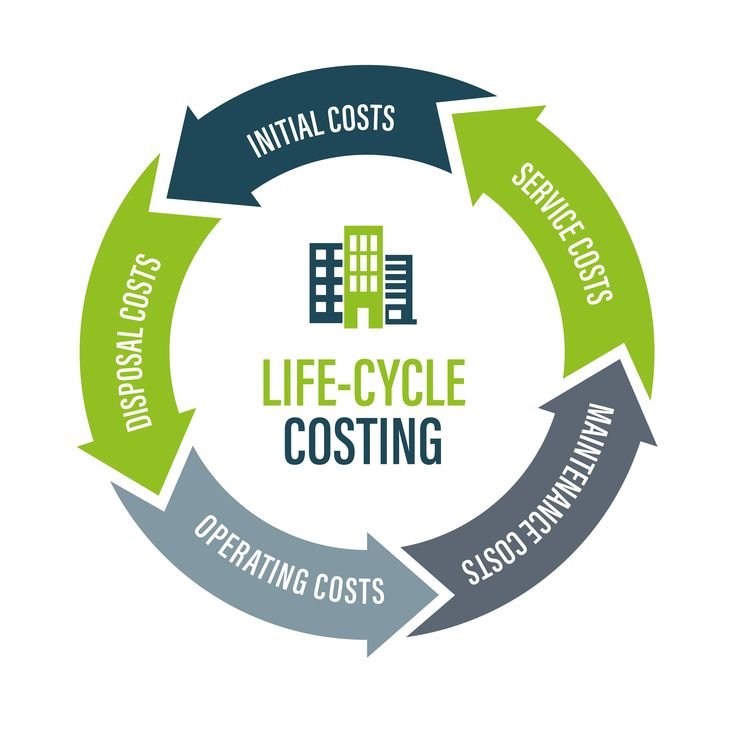
Purchase price is one line item. Lifecycle cost is what matters over 20–30 years. A standard 1-year warranty covers manufacturing defects only. IGU seal warranties typically run 5–10 years — on a 100-unit building, even a 5% seal failure rate means 5 units needing glass replacement within the warranty period. Stainless steel hardware (grade 304 or 316) holds up significantly better in salt air than standard hardware. A factory-direct premium product typically costs 15–25% more per unit than a low-cost import — but lower maintenance costs, longer hardware life, and avoided early replacements usually close that gap within the first five years of operation.
Selecting a Hurricane Impact Window Supplier
A wrong supplier delays permits, fails inspections, and creates liability. The non-negotiables:
- Hurricane Impact Windows product approval documentation: NOA certificates, Florida PA numbers, and current DP rating sheets should be provided without being asked twice. Verify every approval is currently active.
- HVHZ experience: A supplier primarily serving inland markets may lack the documentation fluency HVHZ inspections require.
- Production transparency: Standard impact windows run 4–8 weeks. Custom sizes and bifolds run longer. Vague lead-time answers for a multi-unit order are a red flag.
- Factory-direct advantage: Eliminates markup and enables direct communication on specifications and production. On a 100-unit project, the cost and operational difference is significant.
- Red flag: Pricing significantly below market for HVHZ-approved products. Compliant products have a cost floor — pricing below it usually means the product isn’t what it claims to be. Contact BMS for a free consultation and quote.
Making the Right Investment
Every decision in this guide comes down to one question: what is the right investment for this project? Hurricane protection is not optional in Florida — the cost of a single storm event on an under-protected building consistently dwarfs the upfront cost of compliant products. The 9th Edition FBC effective December 31, 2026, and proposed 160 mph envelope requirements mean the compliance bar is moving up. Projects specified now should be evaluated against where the code is going, not just where it is today. Quality factory-direct impact windows with documented warranties and proper installation deliver three compounding returns: lower energy bills, annual wind mitigation insurance credits, and higher appraised property value — from the first year of operation.
Key Terms Reference
|
Term |
Definition |
|
Hurricane Impact windows rating |
The rating system classifies hurricane impact windows by debris resistance and wind pressure performance, including the DP rating, the impact test standard, and the product approval tier. |
|
Hurricane-strength windows |
Windows engineered and certified to resist hurricane-force winds and debris via Florida Product Approval or Miami-Dade NOA. |
|
Storm-rated windows |
Windows passing standardized wind pressure and impact resistance testing. In Florida, it implies impact-certified and DP-rated to a defined specification. |
|
Window wind ratings |
Wind load performance values expressed as Design Pressure (DP) in psf. Higher DP = greater structural resistance to wind forces. |
|
Design pressure rating windows |
Formal psf rating indicating how much wind pressure a window can withstand. Varies by floor level, building height, and facade location. |
|
Windstorm certified windows |
Windows are certified to withstand wind and debris loads for a given area. Requires a current Florida Product Approval or Miami-Dade NOA. |
|
Windproof windows |
Colloquial term for impact-rated, windstorm-certified windows. No window is literally wind-proof; certified products are tested to defined performance thresholds. |
|
How strong are hurricane impact windows |
Measured by DP rating (structural) and impact class (debris). Residential: DP-30–DP-50. Coastal high-rise and HVHZ: DP-50–DP-70+. |